The Strategic Reset
On 11 March 2026, NextEnergy Solar Fund (NESF) announces a roadmap to give shareholders both total returns and attractive income with long-term visibility. This strategic reset sees NESF become the first solar investment company to tackle the sector-wide share price discount head-on by positioning itself for growth. The reset frees up capital to reinvigorate our net asset value (NAV) growth, reduce debt, and invest in high-yielding opportunities, such as battery energy storage systems.
Strategic Seminar
Strategic Seminar Speakers
How our strategic reset and 10-year roadmap work together to deliver NAV growth and total shareholder returns
Roadmap goals
- Provide shareholders with a total return of 9% to 11%.
- Restart NAV growth.
- Reduce debt to a range between 40% to 45% of GAV.
- Provide a long‑term dividend that is covered through a 75% payout ratio.
- Initiate regular capital recycling for reinvestment.
- Repower existing assets.
- Increase energy storage assets to 30% of portfolio GAV.
What the reset changes
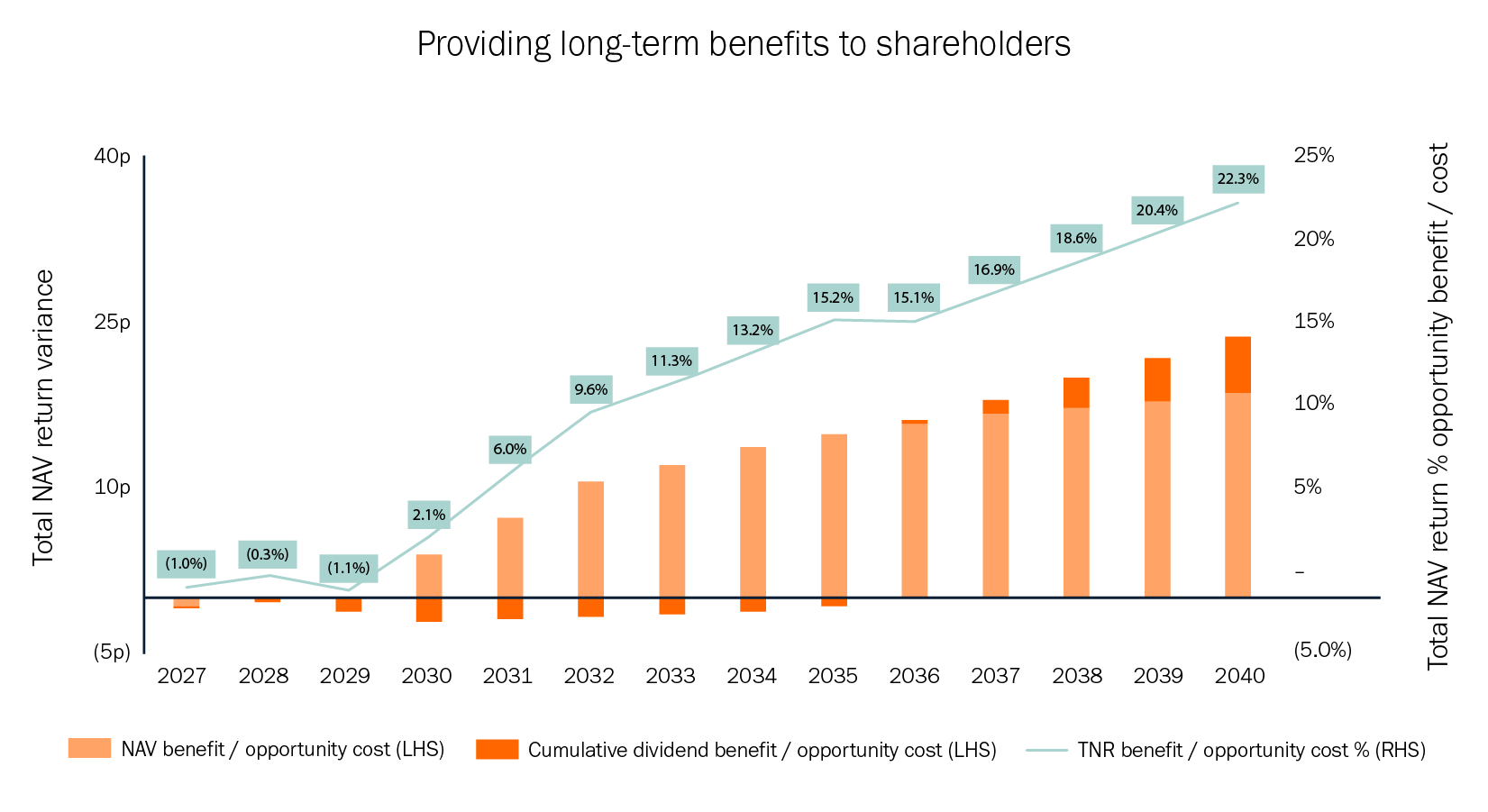
- A shift in focus to total returns: The Company will in future aim to deliver a balanced total return profile that provides ordinary shareholders with both attractive income and capital growth, targeting total long‑term returns of between 9% to 11%.
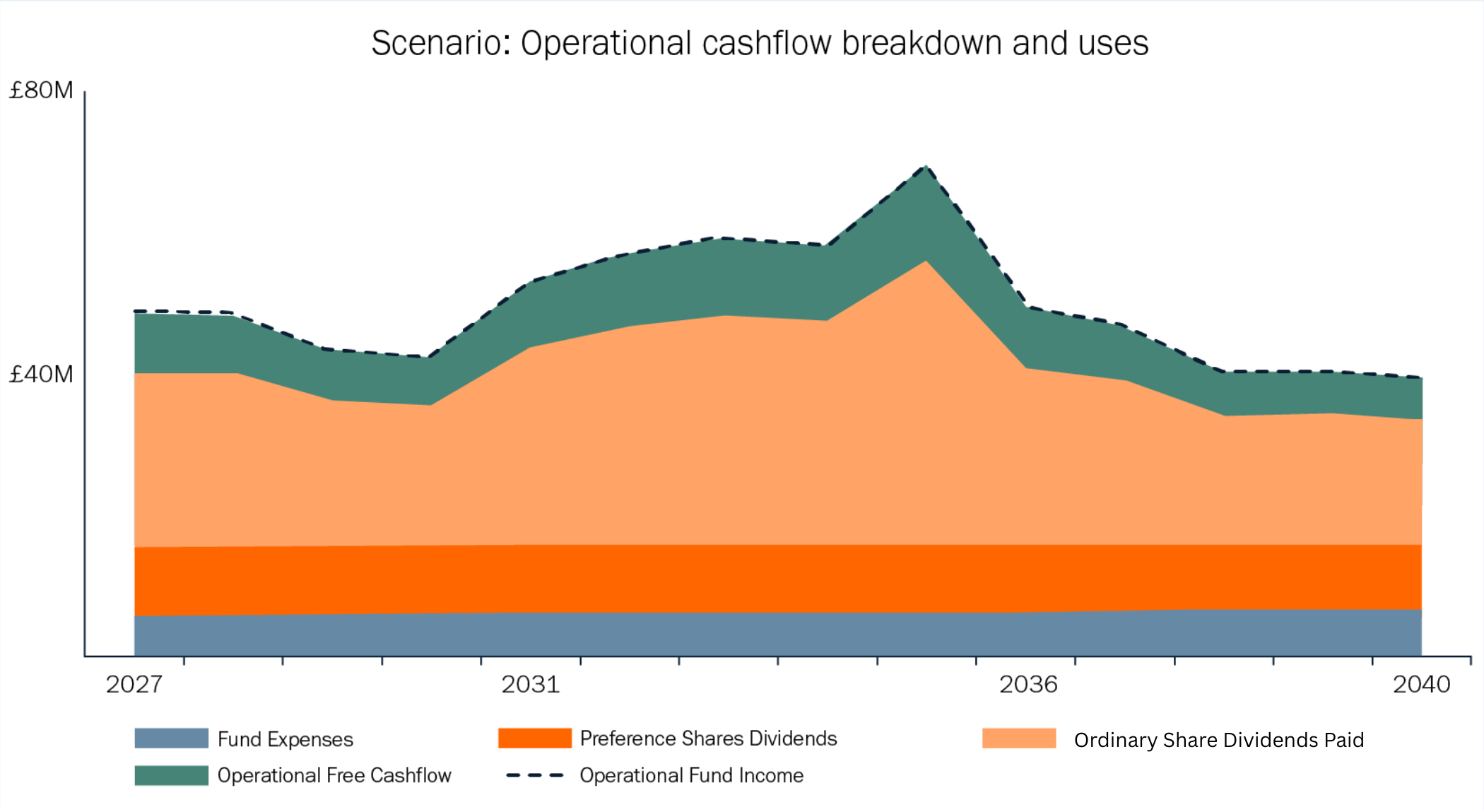
- Long‑term income distribution: Following the payment of this year’s ordinary share target dividend of 8.43p, the Company will transition from a progressive dividend policy to a percentage‑based dividend policy, targeting a 75% distribution of operating free cashflows, post debt servicing and portfolio and fund operating expenses. The new dividend policy is expected to free up approximately £40m of operational free cash flows over the next five years, unlocking capital for the Company to strengthen its balance sheet through additional debt repayments while also supporting future Net Asset Value growth opportunities. Following the sale of the final phase the capital recycling programme, during which 100MW of operational assets were successfully sold, and also reflecting the impact of lower power prices, the estimated dividend range for FY26/27 would be 4.5p to 5.1p per Ordinary Share, which is the equivalent to a c.7% to c.9% dividend yield as at 10 March 2026.
- A reduction in debt: The Company will reduce and maintain its total gearing in a range between 40% to 45% of Gross Asset Value (“GAV”), comfortably below the Company’s investment policy limit of 50%.
- Initiate more frequent capital recycling events for reinvestment: The Company will expand its Capital Recycling Programme through additional asset sales of up to 120MW. The Company will also benefit from the realisations of its private solar fund investment and two co-investments from 2027 onwards, representing the equivalent of 89MW.
- Restart NAV growth: The Company will target renewed NAV growth through repowering existing solar assets with the latest technology to increase power output alongside the addition of co-located energy storage, which would enable the Company to ensure long-term asset health and performance, whilst adding revenue diversification.
- Increase energy storage exposure: The Company will look to increase its allocation to energy storage up to 30% of GAV. This will enhance the Company’s existing stable revenues generated by its operational solar assets and support future revenues post the end of the Company’s subsidised asset period.
Tailwinds behind the roadmap
• Macroeconomics: UK interest rates have been steadily decreasing since 2024 with further softening expected in 2026, despite recent events in the Middle East.
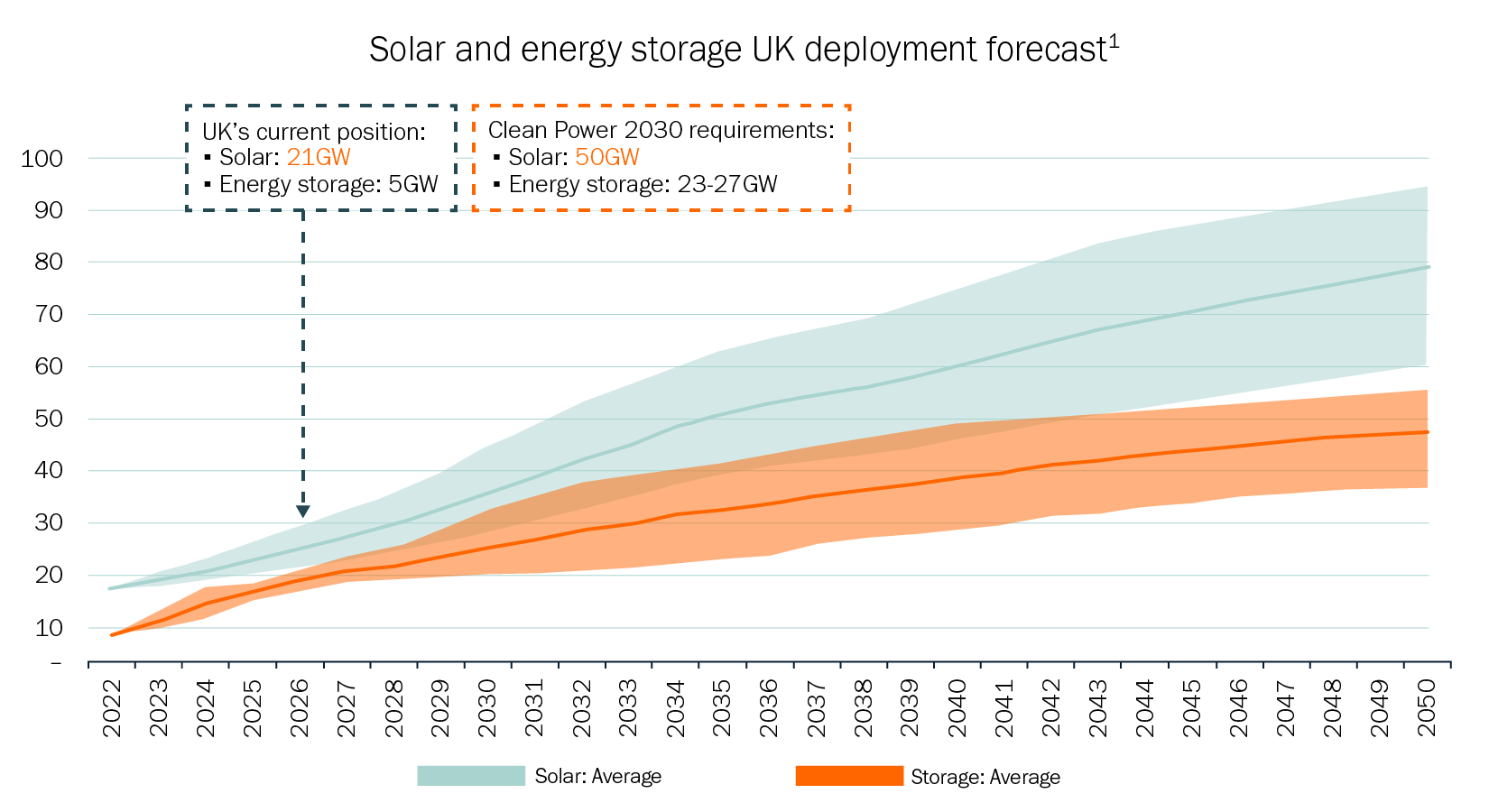
• Policy and regulatory: Clean Power 2030 mandates a tripling of solar capacity to 50GW and a four-fold increase in energy storage to 27GW.
• Market environment: Electricity demand is still rising and the need for energy security is higher than ever.
• Capital flow and sentiment: The UK’s clean power transition requires sustained, large-scale generation investment. NESF’s portfolio remains robust.